Apoquel (oclacitinib maleate) is a Janus kinase (JAK) inhibitor that eases canine allergic itch by blocking pruritic and pro-inflammatory cytokines. It is effective, but its own FDA-approved label carries meaningful safety language every dog owner should read. Because oclacitinib modulates the immune system, the label pairs symptom relief with clear warnings about infection and cancer risk. Below is a plain-language summary drawn only from Zoetis's official label.
Not for dogs under 12 months of age.
Modulates (suppresses) the immune system; not for dogs with serious infections.
May increase susceptibility to infection, including demodicosis (demodectic mange).
May worsen (exacerbate) neoplastic conditions; weigh risks and benefits before use in dogs with a history of recurrent infection, recurrent demodicosis, or cancer.
Monitor treated dogs for new infections and neoplasia.
Not evaluated with steroids, cyclosporine, or other systemic immunosuppressants.
Not for breeding, pregnant, or lactating dogs.
Human warnings: not for human use; wash hands after handling; flush eyes and seek care on contact or accidental ingestion.
Common in field studies: vomiting, diarrhea, lethargy, anorexia, polydipsia, and new skin lumps.
Across 283 study dogs: pyoderma (12%), dermal lumps (12%), otitis/ear infection (9.9%), vomiting (9.2%), diarrhea (6%), histiocytoma (3.9%), cystitis (3.5%), yeast skin infections (2.5%), pododermatitis (2.5%), lipoma (2.1%), lymphadenopathy, and aggression.
Lab changes: decreased white blood cells, decreased serum globulin, increased cholesterol and lipase.
Post-approval (2020): elevated liver enzymes, seizures, demodicosis, and death (including euthanasia) reported.
Field study: two dogs euthanized for malignant neoplasia—a heart-base mass (day 21) and a Grade III mast cell tumor (day 60).
Continuation study (239 dogs, averaging ~372 days): six dogs euthanized for suspected malignancies (thoracic and abdominal metastatic disease, splenic, frontal sinus, intracranial, and transitional cell carcinoma), plus two Grade II mast cell tumors, one B-cell lymphoma, two apocrine gland adenocarcinomas, and an oral spindle cell sarcoma.
Post-approval: benign, malignant, and unclassified neoplasms, papillomas, histiocytomas, and lymphoma reported.
Safety studies also showed reduced immune-tissue cellularity (lymph nodes, spleen, thymus, bone marrow, gut-associated lymphoid tissue).
The label notes causation cannot always be confirmed from these reports, yet still warns Apoquel may exacerbate cancer.
Because Apoquel manages symptoms without addressing the cause, a multimodal, avoidance-first plan is often safer and less expensive over time—and can reduce or eliminate drug dependence.
Avoid triggers first: strict flea control, a proper diet-elimination trial for food allergy, frequent bathing and wipe-downs to remove pollen, and house-dust-mite reduction.
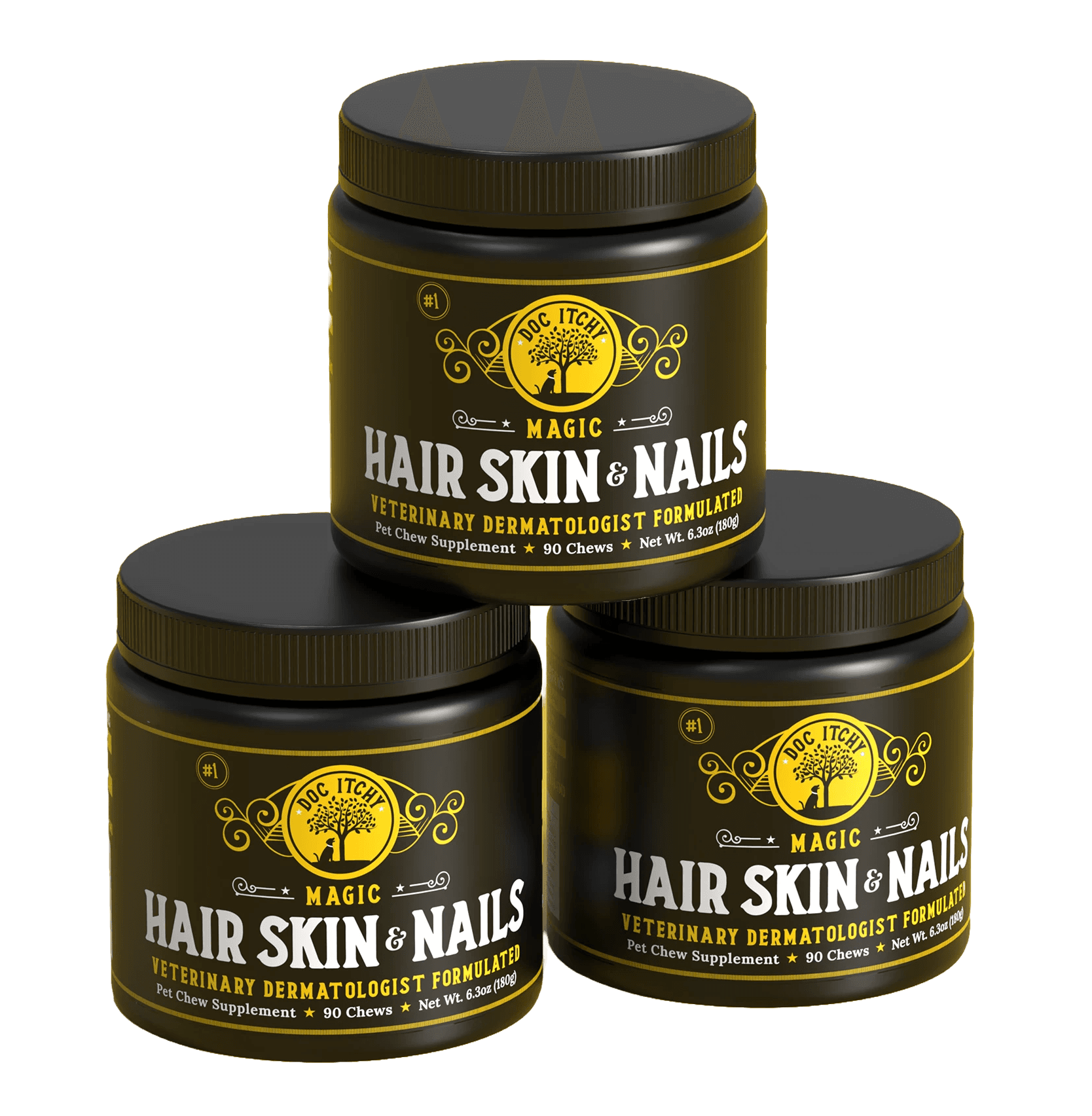
Anti-inflammatory nutrition: EPA omega-3, vitamin A, niacinamide, and zinc calm inflammation and rebuild the skin barrier—the core of Doc Itchy's NASC-certified Hair, Skin & Nails Chews.
Gut–skin axis: species-specific probiotics support the gut, skin, and ear microbiome that drives allergic inflammation.
Topicals: medicated shampoos, mousses, and wipes cut allergen absorption and secondary infections.
Immunotherapy (ASIT): the only therapy that re-educates the immune system toward the cause.
Severe cases may still need veterinary-prescribed medication—partner with your veterinarian and never stop a prescribed drug abruptly. Free avoidance and multimodal patient handouts are available at docitchytools.com.