An Age-Related Hormone Shift, Not a Human Menopause
Aging dogs don't experience true menopause — among primates, that trait is unique to humans, and in the animal kingdom it otherwise appears only in a handful of toothed whale species such as orcas and belugas. Dogs remain fertile into old age. But geriatric dogs do undergo a real, measurable hormonal transition: pineal melatonin output declines with age, and circadian rhythm control weakens as a result. Research on aging mammals shows melatonin secretion is gradually lost over the lifespan, to the point that in very old animals the nighttime melatonin rhythm becomes barely detectable.
What Declining Melatonin Does to the Aging Body
Melatonin isn't just a sleep signal — it synchronizes other hormone rhythms throughout the body. When its rhythm deteriorates, related circadian systems can fall out of sync with each other, a process some researchers link to accelerated aging and greater vulnerability to age-related disease. In dogs, this shows up as nighttime restlessness, disrupted sleep-wake cycles, and — notably for skin health — a hair coat that no longer responds normally to seasonal photoperiod cues.
Melatonin Sensitivity and the Skin-Hormone Connection
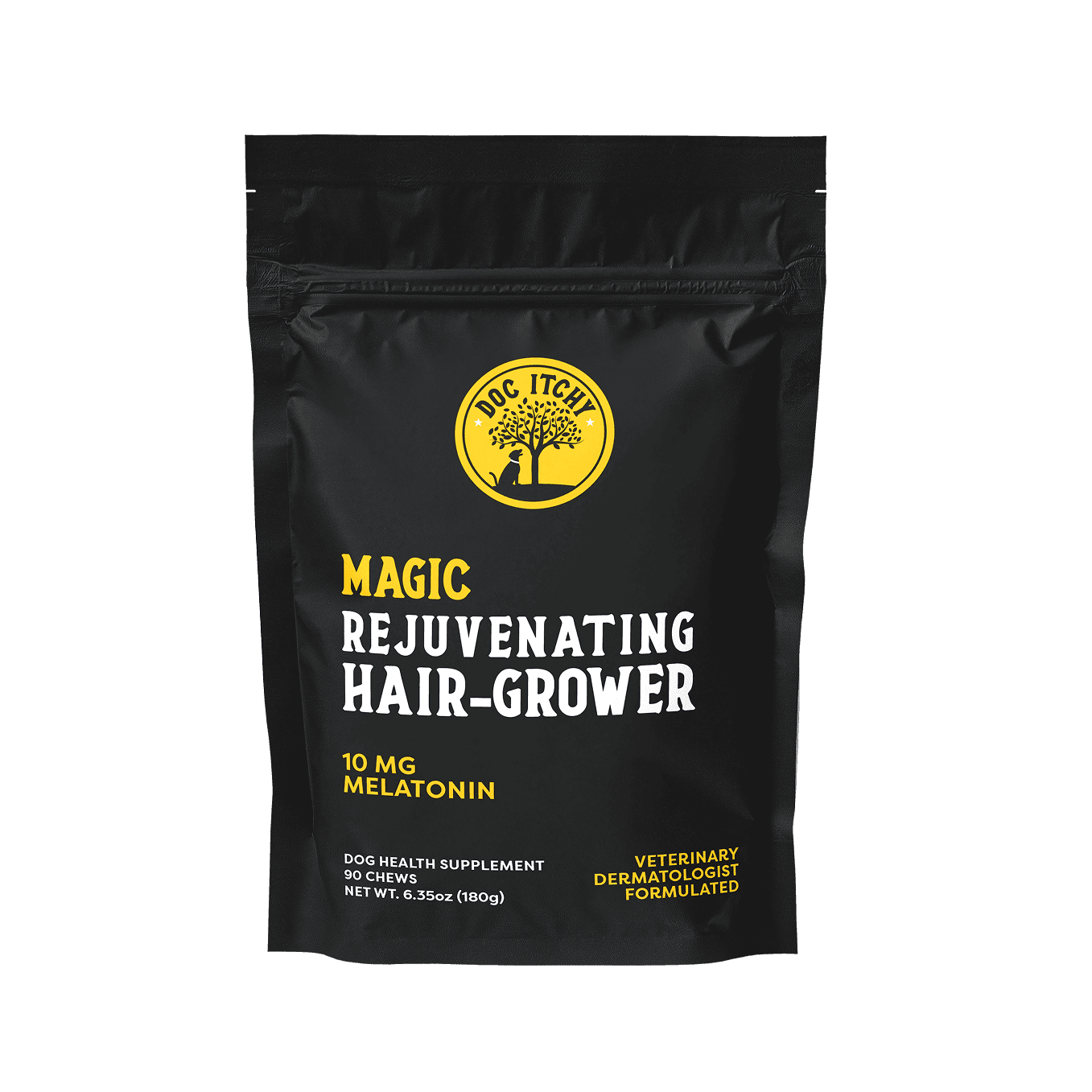
Hair follicles carry their own melatonin receptors (MT1/MT2), meaning melatonin acts locally on skin, not just centrally on the brain. This is the mechanism behind melatonin's clinical use in hormone-responsive hair cycle arrest (Alopecia X), where follicles get "stuck" outside normal growth phase — a condition tied to altered hormone receptor sensitivity at the follicle itself. As geriatric dogs' baseline melatonin rhythm weakens, follicle-level hormone signaling can become similarly dysregulated, contributing to dull coats, delayed regrowth, and uneven shedding independent of any nutritional deficiency.
Supporting the Aging Hormone-Skin Axis
Because geriatric hormone dysregulation involves both central circadian signaling and local follicle receptor activity, supplementation strategy matters. Consistent, appropriately dosed melatonin can help resynchronize disrupted rhythms, while supporting omega-3 and antioxidant status addresses the oxidative stress that accompanies age-related pineal decline. Owners of senior dogs with new-onset dull coat, delayed shedding, or restless nighttime behavior should discuss hormone-aware skin and sleep support with their veterinarian rather than assuming these changes are purely cosmetic.