The Yeasty Odor Behind the Itch
Malassezia pachydermatis is a yeast that normally lives on canine skin and in the ears. When it overgrows, it releases volatile organic compounds that produce the distinctive musty, yeasty "corn-chip" or sour-milk odor owners notice—usually strongest in the ears, paws, armpits, groin, and skin folds. Affected dogs develop intense itching, greasy or thickened skin, reddish-brown staining, and darkened, inflamed patches.
Allergies and Aging Hormones Set the Stage
Malassezia overgrowth is almost always secondary. The most common trigger is underlying allergy—atopic dermatitis, food reactions, or flea hypersensitivity—which inflames skin and lets yeast multiply. Endocrine shifts do the same: hypothyroidism and geriatric hormone imbalances weaken skin defenses. Melatonin, a hormone that helps regulate coat and skin cycles, declines with age and supports hormone-responsive skin health. When itching is severe, scratching invites secondary bacterial infection, producing the pus and crusting seen in advanced cases.
Probiotics and Vitamin A Rebalance the Microbiome
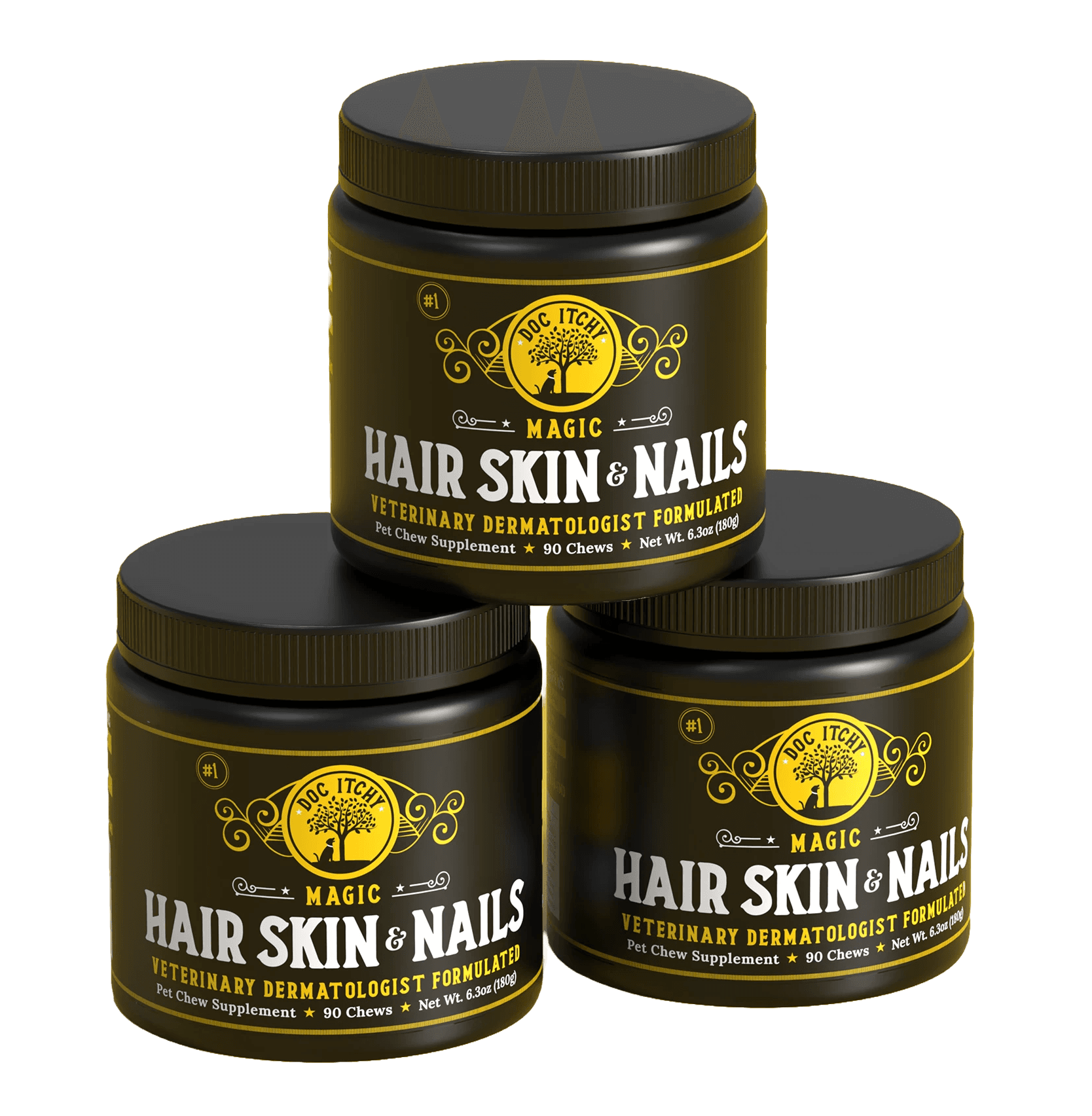
Because gut and skin communicate through the gut–skin axis, restoring microbial balance matters. Dogs with atopic dermatitis show reduced gut diversity; species-specific probiotics have lowered pruritus scores, serum IgE, and clinical severity while shifting the gut and skin microbiomes back toward balance. Vitamin A maintains the epithelial barrier and normalizes keratinocyte turnover, helping skin resist yeast colonization. Doc Itchy's Hair, Skin & Nails Chews combine these targeted nutrients.
Topical Zinc's Disinfecting Support
Zinc adds a direct antimicrobial layer. Applied topically, zinc compounds such as zinc pyrithione are broad-spectrum—with well-documented antifungal activity against Malassezia plus action against bacteria—while zinc oxide supports the skin barrier and re-epithelialization. Paired with allergy control, probiotics, and vitamin A, zinc helps break the overgrowth cycle at its source.