A Low T4 Is Only the First Clue
When a healthy-seeming 4-year-old Great Pyrenees tests low for total T4 (TT4), hypothyroidism belongs on the list — but a single low reading rarely confirms it. Total T4 fluctuates throughout the day, and studies show 50–60% of normal dogs dip below the reference range at some point. Non-thyroidal illness and common drugs like glucocorticoids, sulfonamides, and phenobarbital can also depress TT4 without any true thyroid disease.
Confirming "Truly Low" Thyroid
Only dogs with genuinely low thyroid function should be treated. That means confirming a low TT4 with free T4 — ideally by equilibrium dialysis — plus canine TSH before committing to lifelong medication. Definitive primary hypothyroidism shows low TT4 and low free T4 alongside an elevated TSH. Treating a euthyroid dog on TT4 alone is a common, avoidable mistake that also delays finding the real cause of its signs.
Levothyroxine and Why Timing Matters
Confirmed cases respond to synthetic levothyroxine, usually started near 0.02 mg/kg. Dogs clear thyroid hormone far faster than people: the canine half-life is roughly 10–16 hours versus about seven days in humans. Because of that rapid turnover, twice-daily dosing — every 12 hours — is the recommended starting schedule for steady hormone levels. Recheck total T4 around four weeks in, drawn 4–6 hours after a dose, then adjust.
Skin, Coat, and Ear Recovery
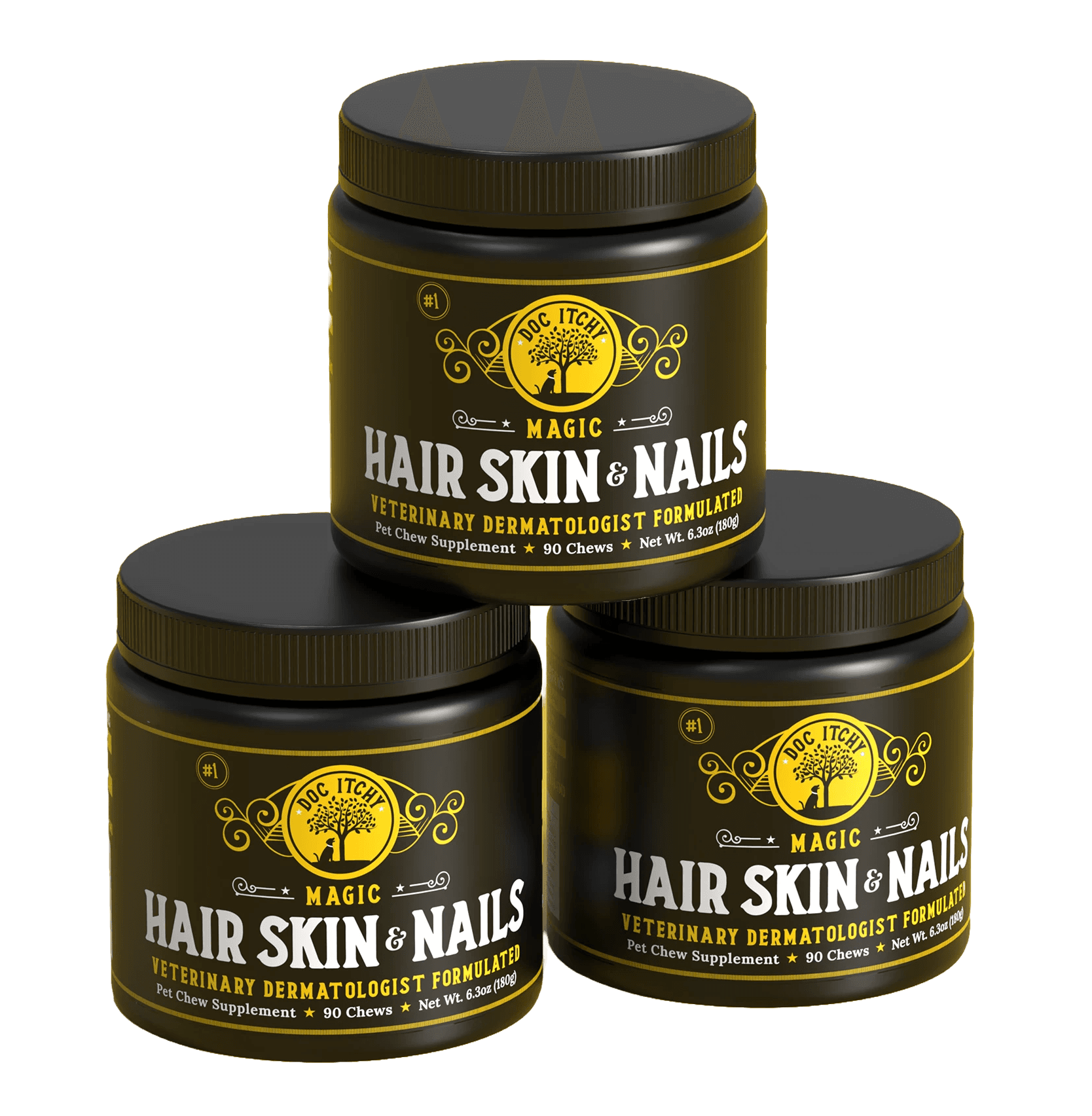
Hypothyroid dogs often show a dull coat, symmetrical hair loss, and recurrent skin or ear infections, and these dermatologic changes are the slowest to resolve — often taking months on correct therapy. Doc Itchy's Hair, Skin & Nails Chews (NASC-certified, USA-manufactured) provide EPA omega-3s and skin-barrier nutrients that support coat health and calm inflammation as an adjunct — never a replacement for proper diagnosis and levothyroxine. Find free owner handouts at docitchytools.com.