What Causes Bald Spots and Thinning
Patchy hair loss in dogs rarely has a single cause. In older dogs, thinning coats are very commonly driven by the hormone imbalances of aging, which disrupt the normal hair-growth cycle and leave follicles stalled. Allergies, parasites, and nutritional gaps are other frequent culprits. Because regrowth follows the body's natural cycle, meaningful improvement typically takes 8–12 weeks of consistent support.
Melatonin for Aging, Thinning Coats
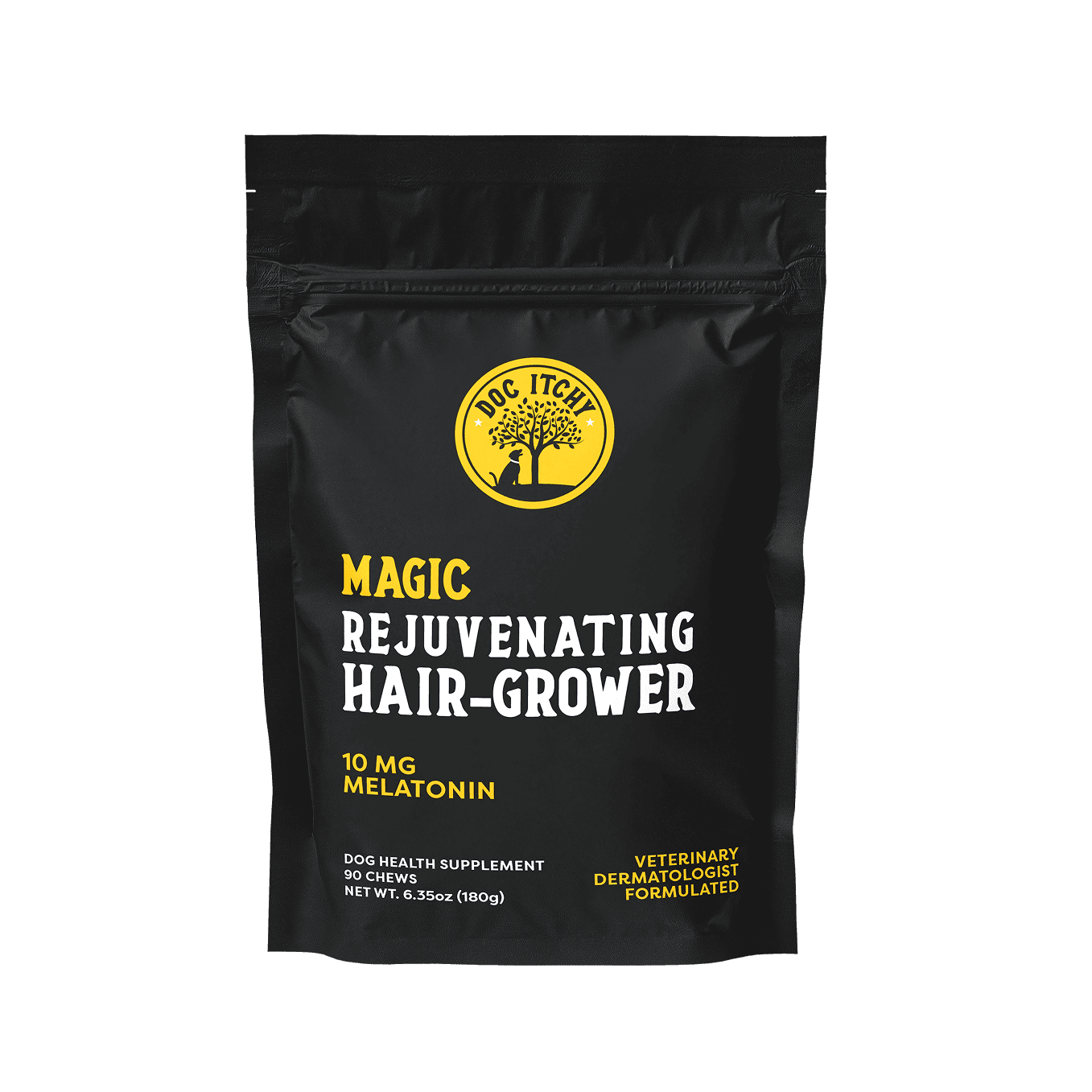
Medical melatonin is the most effective option for rejuvenating older dogs with thinning hair caused by age-related hormone imbalance. Controlled veterinary studies show melatonin can restart hair-cycle arrest, with partial to complete regrowth reported in the majority of treated dogs. It works by helping normalize sex-hormone signaling and follicle activity, and carries a low risk of side effects. Give it in the evening, as it can be mildly sedating.
Nutrients That Rebuild Skin and Coat
Doc Itchy's Hair, Skin & Nails Chews combine medical-strength nutrients with published clinical support:
Omega-3 EPA — reduces skin inflammation and itch and raises epidermal ceramides, improving barrier function and coat quality.
Vitamin A (retinol) — regulates skin-cell turnover and follicle health.
Niacinamide (B3) — supports the skin barrier and calms inflammation.
Zinc — a cofactor for keratin synthesis; deficiency causes crusting and hair loss.
When to Call Your Veterinarian
If your dog has itchy, painful hot spots, contact your veterinarian about skin infections. Hot spots are localized bacterial infections triggered by allergies — especially allergy to biting insects like fleas, which cause most hot spots. Supplements support coat health, but active infection, sudden hair loss, or intense itching needs veterinary diagnosis and treatment first.