What Actually Causes Canine Dermatitis
Dermatitis rarely has a single cause. Atopic dogs have a measurably defective skin barrier: transepidermal water loss is dramatically elevated in both lesional and normal-appearing skin, driven by reduced stratum corneum ceramide content. A leaky barrier admits allergens and invites secondary Staphylococcus and Malassezia infection of skin and ears. Scratching further damages the barrier, and nutrient gaps in keratinization cofactors complete a self-reinforcing cycle of inflammation, itch, and hair loss.
EPA Omega-3: Proven Inflammation Control
EPA competes with arachidonic acid for COX and LOX enzymes, shifting eicosanoid production away from inflammation. In dogs, EPA and DHA supplementation lowered serum prostaglandin-E2, interleukin-1, and interleukin-6 activity, and controlled trials show reduced CADESI scores and owner-reported pruritus, plus steroid- and cyclosporine-sparing effects. Randomized, placebo-controlled canine work has used EPA near 50 mg/kg/day.
Zinc: Oral and Topical Keratinization Support
Zinc is a component of more than 70 metalloenzymes and regulates keratinization, wound healing, immune function, and reproduction; the skin holds roughly 20% of total body stores and can absorb zinc directly. Zinc-responsive dermatosis produces crusting, scaling, and alopecia around eyes, muzzle, ears, and pressure points. Zinc methionine offers better oral bioavailability and less GI upset than zinc sulfate. Phytates and excess calcium block absorption.
Vitamin A and Niacinamide
Vitamin A drives epidermal differentiation through retinoid receptors. Vitamin A-responsive dermatosis — classically in young American cocker spaniels — improves visibly within 6–8 weeks on oral vitamin A given with a fatty meal; dosing must stay veterinarian-supervised to avoid hypervitaminosis A. Niacinamide (not niacin) is a documented immunomodulator that prevents mast cell degranulation, blocks antigen/IgE-induced histamine release, and decreases eosinophil and neutrophil chemotaxis and prostaglandin synthesis.
Why the Combination Matters
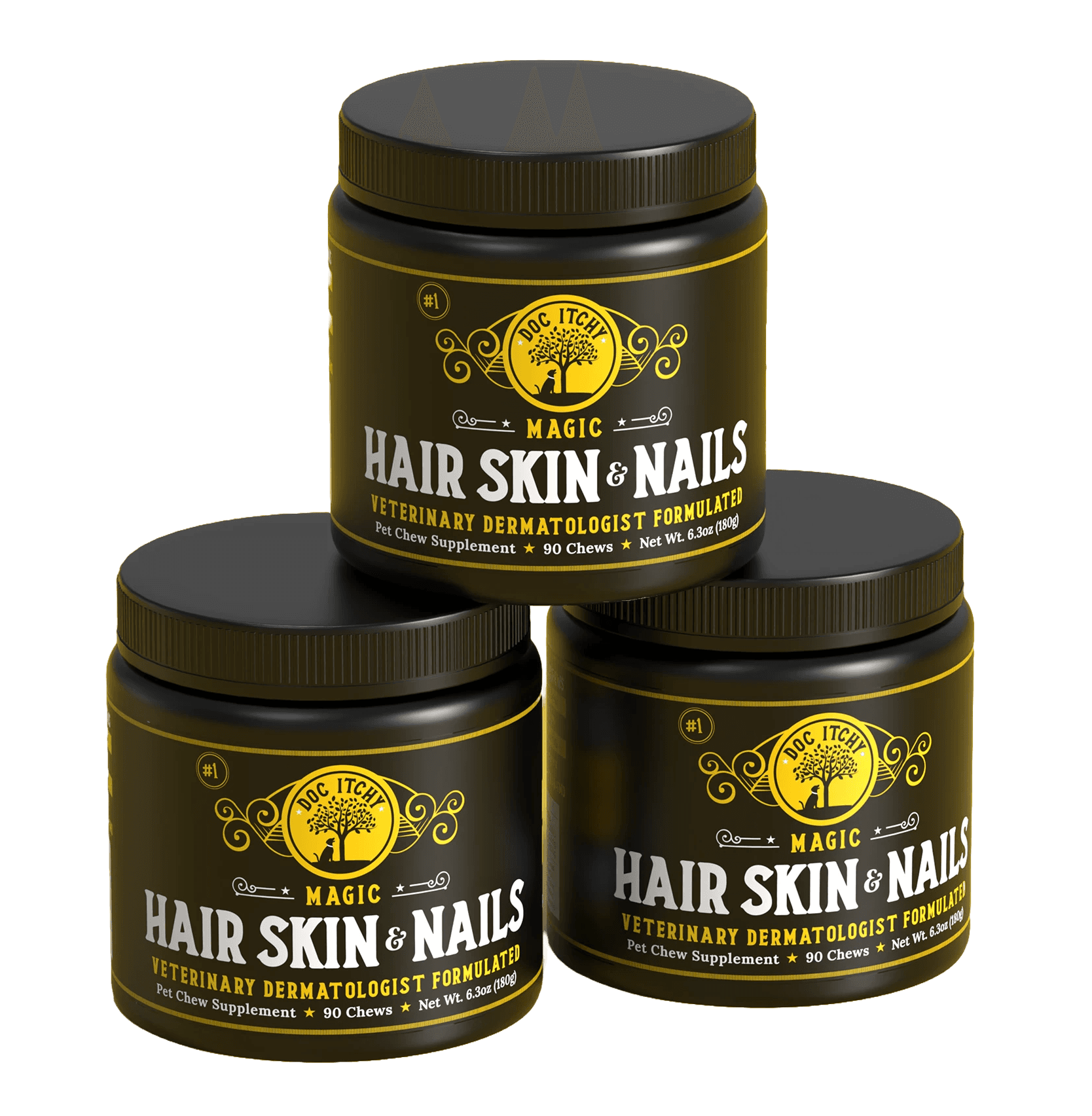
These four nutrients act on separate, non-overlapping targets: eicosanoid signaling, keratinization, epidermal differentiation, and mast cell stability. Nicotinamide also increases stratum corneum ceramide biosynthesis and reduces transepidermal water loss — repairing the exact defect that starts the allergy cycle. Doc Itchy's Hair, Skin & Nails Chews deliver this combination in one NASC-certified, USA-manufactured formula for skin, coat, and ear health.