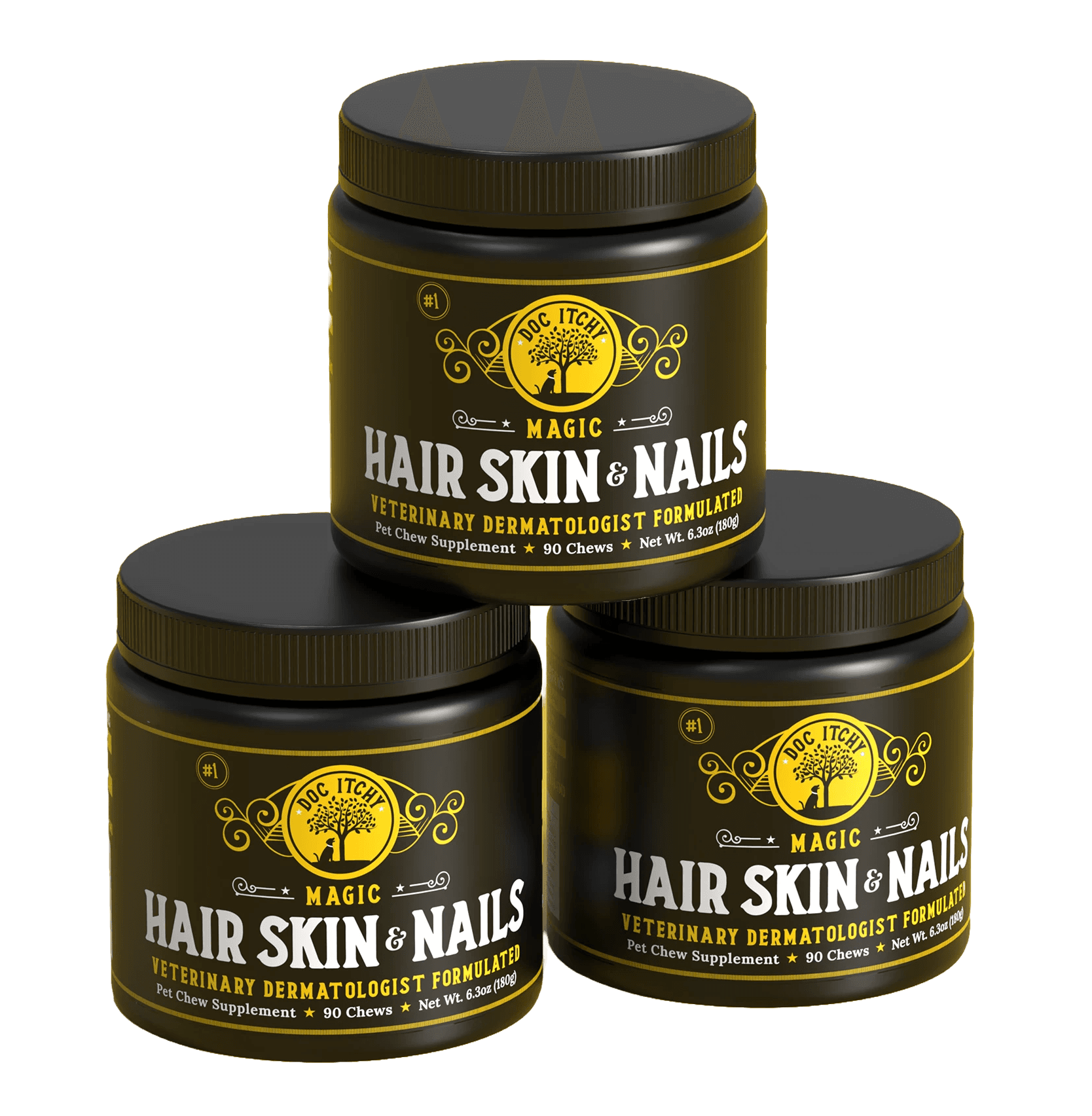
In both human dermatology and veterinary medicine, one theme keeps emerging across the strongest clinical studies: despite the explosion of supplement marketing, only a small handful of nutrients consistently demonstrate measurable, repeatable benefits for skin health. The rest? Mostly clever labels, buzzwords, and placebo-level impact.
Across recent dermatology literature, four ingredients stand out as the true therapeutic workhorses—backed by decades of controlled trials, molecular research, and real-world clinical outcomes:
Omega-3 Fatty Acids (EPA + DHA)
These long-chain fatty acids have some of the most robust evidence in both human and veterinary medicine. They reduce inflammatory cytokines, improve lipid barrier function, soothe atopic and allergic skin disease, and enhance overall coat and skin hydration in animals. In both humans and dogs, EPA is particularly effective at calming redness, reducing flare frequency, and strengthening the skin barrier.
Niacinamide (Vitamin B3)
A cornerstone of modern dermatology, niacinamide helps strengthen the epidermal barrier, reduce transepidermal water loss, regulate sebaceous gland activity, and calm inflammatory pathways. It also supports DNA repair enzymes and improves microcirculation. In veterinary dermatology, niacinamide-based protocols are increasingly used as non-steroidal support for chronic inflammatory skin disorders with encouraging clinical results.
Vitamin A (Retinol / Retinoids)
Often considered the foundation of skin science, vitamin A regulates keratinization, increases epidermal turnover, reduces scaling, normalizes oil production, and supports healthy hair follicles. It has decades of clinical evidence in humans and remains an important therapeutic option in dogs for conditions ranging from seborrhea to follicular dysplasia. Retinoids continue to be among the most extensively studied ingredients for structural skin renewal across species.
Zinc
Zinc plays an essential role in immune function, skin repair, wound healing, and normal keratinocyte signaling. Zinc deficiency can contribute to or worsen numerous skin disorders in both humans and dogs. Supplementation has been shown to improve coat quality, reduce scaling, support wound healing, and strengthen the skin barrier, making it one of the few minerals with consistently observable clinical benefits.
What About Everything Else?
Many other supplements—including collagen powders, biotin-only formulas, herbal blends, and numerous so-called "immune boosters"—have far less consistent clinical evidence supporting meaningful skin benefits. While some may offer value in specific situations, their widespread popularity often exceeds the strength of the available scientific data.
By contrast, omega-3 fatty acids, niacinamide, vitamin A, and zinc continue to stand apart as the ingredients most consistently supported by research for improving skin health and delivering measurable clinical results in both human and veterinary dermatology.