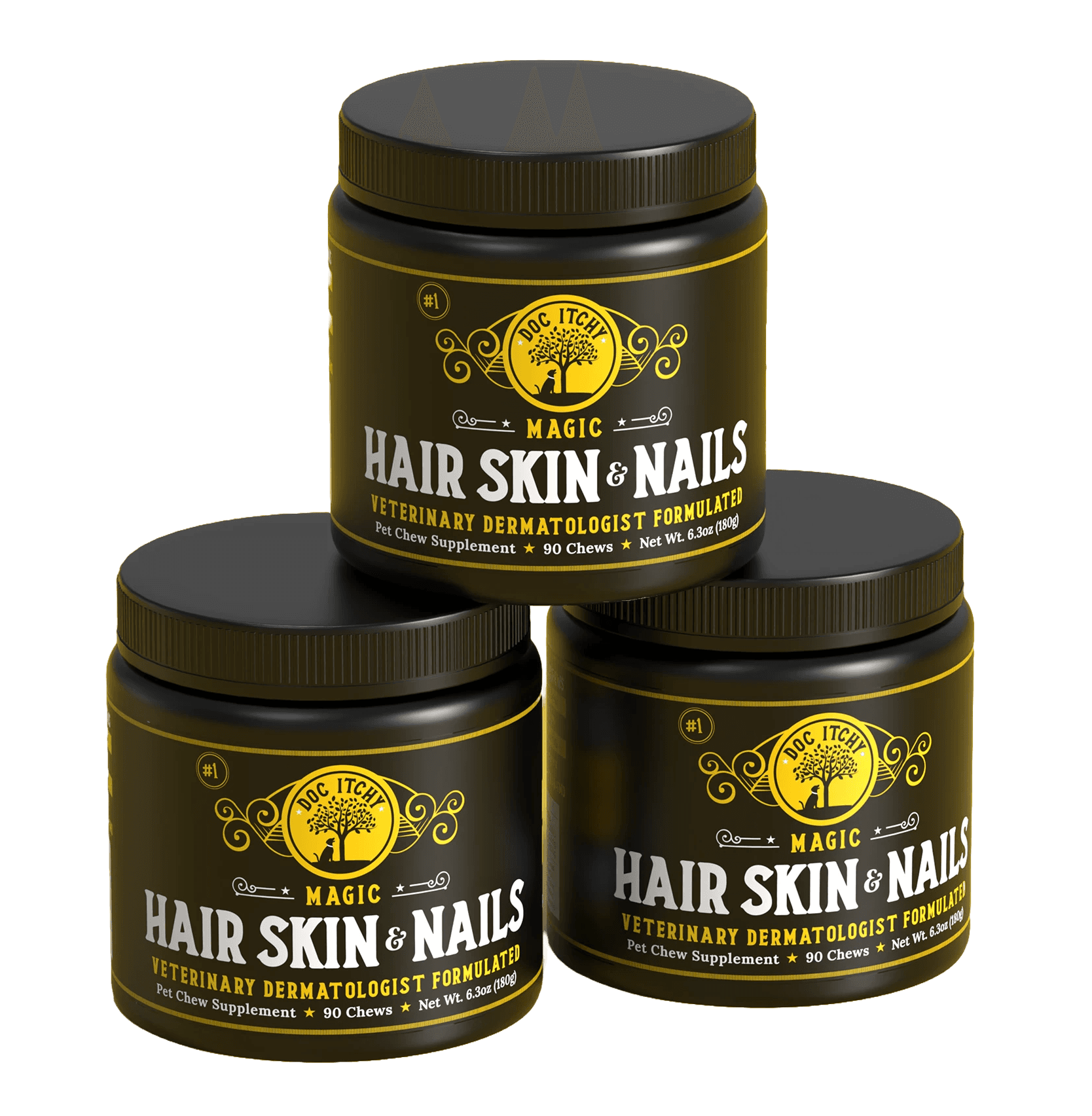
When a dog's skin becomes unhealthy, the effects often extend well beyond the surface. The coat may become dull, hair may thin, nails can become brittle, and the skin may become flaky, greasy, itchy, or inflamed. Because skin health is influenced by many biological processes, veterinary dermatology often emphasizes a comprehensive nutritional approach rather than relying on a single "miracle" ingredient.
Three nutrients frequently discussed in veterinary nutrition and dermatology are EPA omega-3 fatty acids, niacinamide (vitamin B3), and vitamin A. Each supports skin health through different biological pathways.
EPA Omega-3: Supporting a Healthy Inflammatory Response
EPA (eicosapentaenoic acid), a marine-derived omega-3 fatty acid, is one of the best-studied nutrients for canine skin health. Veterinary research has shown that omega-3 supplementation can help support dogs with inflammatory skin conditions and may contribute to improvements in itch, coat quality, and overall skin comfort. EPA is also commonly included in dermatology protocols for dogs with disorders involving excessive scaling and sebaceous gland dysfunction.
Niacinamide: Immune and Skin Barrier Support
Niacinamide, also known as nicotinamide, is the amide form of vitamin B3. In veterinary dermatology, it has been used as part of treatment protocols for certain inflammatory and immune-mediated skin diseases because of its immunomodulatory and anti-inflammatory properties. While not appropriate for every skin condition, niacinamide may help support normal immune function and healthy skin barrier maintenance in selected cases under veterinary supervision.
Vitamin A: Supporting Healthy Skin Cell Turnover
Vitamin A plays an essential role in normal skin development, epithelial integrity, and keratinization—the process by which skin cells mature and form the protective outer layer of the skin. Veterinary dermatologists also use vitamin A in selected disorders involving abnormal keratinization, seborrhea, and certain follicular disorders. Proper vitamin A status helps maintain healthy skin, hair follicles, and sebaceous gland function.
Why These Nutrients Complement One Another
These three nutrients support skin health through distinct but complementary mechanisms. EPA helps maintain a healthy inflammatory response, niacinamide supports immune regulation and skin barrier function, and vitamin A contributes to normal skin cell maturation and healthy follicle function. Together, they provide nutritional support for healthy skin, coat quality, and normal glandular function.
Nutrition Is Only One Piece of the Puzzle
Although nutritional support can play an important role, not every dog with skin disease has a nutritional deficiency. Allergies, endocrine disorders, bacterial or yeast infections, parasites, and other underlying medical conditions commonly contribute to skin problems and require accurate diagnosis and appropriate treatment.
Vitamin A supplementation also deserves special attention because it is a fat-soluble vitamin that can accumulate in the body if given excessively. For this reason, supplements containing vitamin A should only be used according to veterinary recommendations.
The Takeaway
EPA omega-3 fatty acids, niacinamide, and vitamin A represent three well-established nutrients that support different aspects of canine skin biology. When incorporated appropriately into a veterinarian-directed nutrition and treatment plan, they can help support healthy skin, a resilient skin barrier, and a healthy coat. Combined with proper diagnosis, routine grooming, balanced nutrition, and veterinary care, they provide a biologically sound approach to supporting skin health from the inside out.