When Seasonal Allergies Begin
Environmental (atopic) allergies in dogs usually appear between one and three years of age. Affected dogs carry a genetic predisposition that skews the immune system toward a T-helper 2 (Th2) response. This drives increased production of allergen-specific IgE antibodies, which bind to mast cells in the skin. Once a dog is sensitized, contact with everyday allergens such as pollens, molds, and dust primes these cells to react.
Why the Itch Spirals
When the allergen is encountered again, IgE-coated mast cells degranulate, releasing histamine, cytokines, and other inflammatory chemicals. These mediators stimulate local nerves and blood vessels, producing the hallmark signs of allergic skin disease: intense itch, redness and inflammation, increased skin warmth and surface moisture, and overproduction of sebum from the oil glands. The result is irritated, greasy, inflamed skin a dog cannot stop scratching.
The Yeast and Bacteria Problem
Warm, moist, oily skin is an ideal habitat for microbes that normally live in low numbers on every dog. As conditions shift, Malassezia yeast and Staphylococcus bacteria multiply, causing secondary Malassezia dermatitis and staphylococcal pyoderma. These infections amplify the itch-and-inflammation cycle and make the original allergic dermatitis significantly worse and harder to control.
Treatment That Targets Both Problems
Effective management works on two fronts at once: calming the underlying allergy and reducing the yeast and bacteria overgrowing on the skin. Several evidence-supported nutrients and topicals help with both, working orally and on the skin surface:
Omega-3 fatty acids (EPA) to lower inflammation and itch
Vitamin A to support the skin barrier and normal oil-gland function
Niacinamide (vitamin B3) to calm inflammation and reinforce the barrier
Zinc to aid skin repair and healthy renewal
Hypochlorous acid as a gentle topical to reduce surface yeast and bacteria
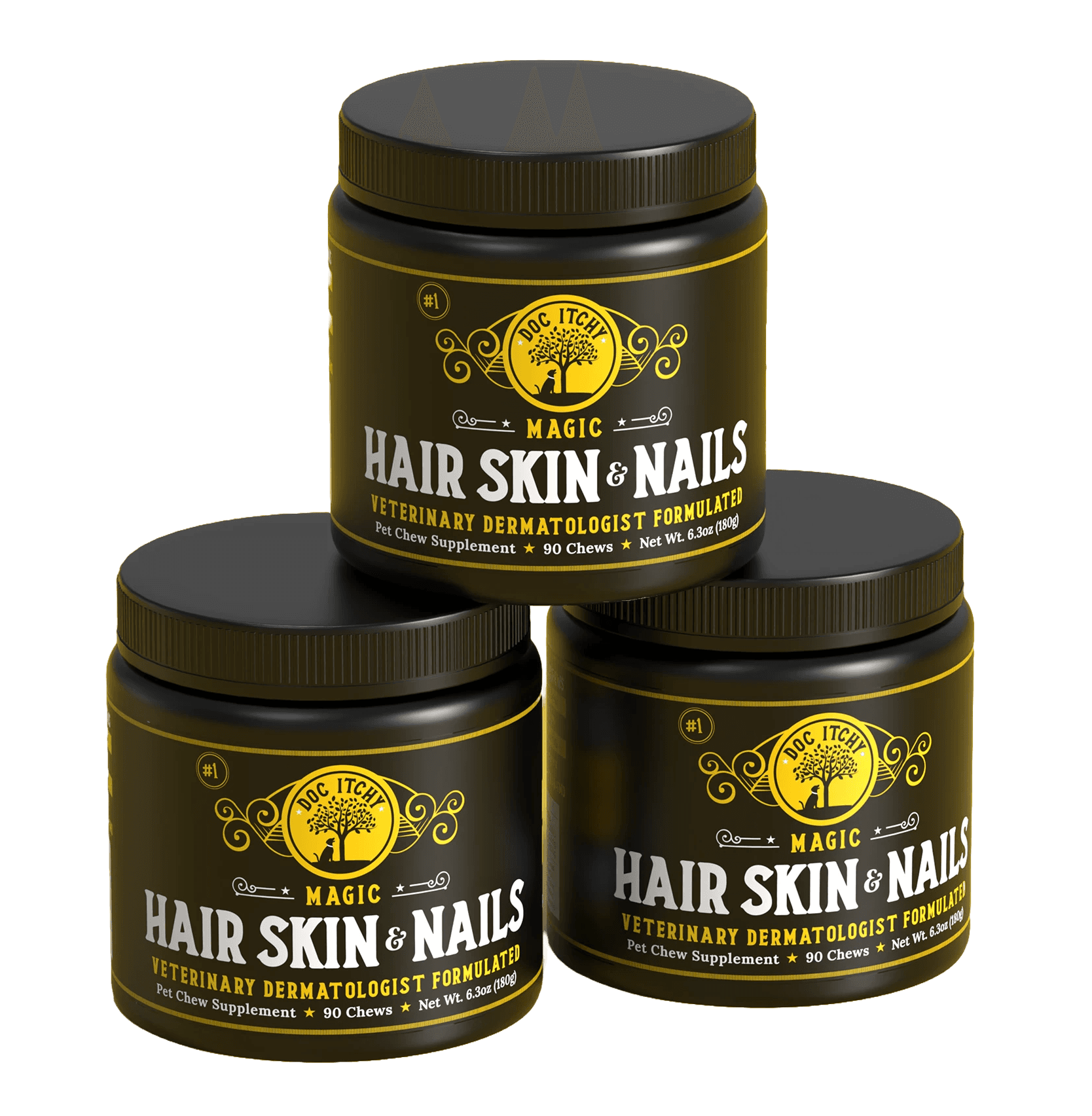
Combination supplements like Doc Itchy's Hair, Skin & Nails Chews bring several of these nutrients together in one daily dose. Used alongside topical care, this oral and on-skin support can ease allergy, inflammation, and infection, helping your pup stay a happier, healthier family member.