Vitamin A and the Skin Barrier
Vitamin A (retinol) and its active form, retinoic acid, regulate how skin cells mature and renew—the process called keratinization. Working through RAR and RXR receptors, it keeps the epidermis, hair follicles, and claws forming in an orderly way. In some dogs, including Cocker Spaniels, Labradors, and Miniature Schnauzers, a vitamin A–responsive dermatosis causes scaling, greasy plaques, and follicular plugging that improves with supplementation.
Calming the Allergic Response
Retinoic acid is a key signal in immune balance. It helps dendritic cells guide immune cells toward regulatory T cells (Tregs), which suppress inflammatory over-reactions. In allergic, atopic dogs whose immune systems skew toward Th2 and IgE-driven itch, supporting this tolerance pathway is biologically relevant—part of why vitamin A appears across dermatology and mucosal-immunity research.
The Gut Barrier and "Leaky Gut"
Much of vitamin A's action happens in the intestine. Gut cells convert it to retinoic acid, which supports the epithelial lining, drives protective IgA antibody production, and directs immune cells to the gut. A healthier barrier means fewer inflammatory triggers crossing into the body—linking vitamin A to the gut–skin axis that underlies many chronic allergies.
Cell Renewal and Healthy Aging
Because vitamin A governs orderly cell differentiation, researchers study retinoids extensively in cancer biology. Importantly, high-dose supplementation has not been shown to prevent cancer and, in human trials, excess actually raised risk—so more is not better. At balanced, physiologic levels, vitamin A simply helps tissues renew properly, supporting skin, coat, and immune resilience as dogs age.
Getting the Dose Right
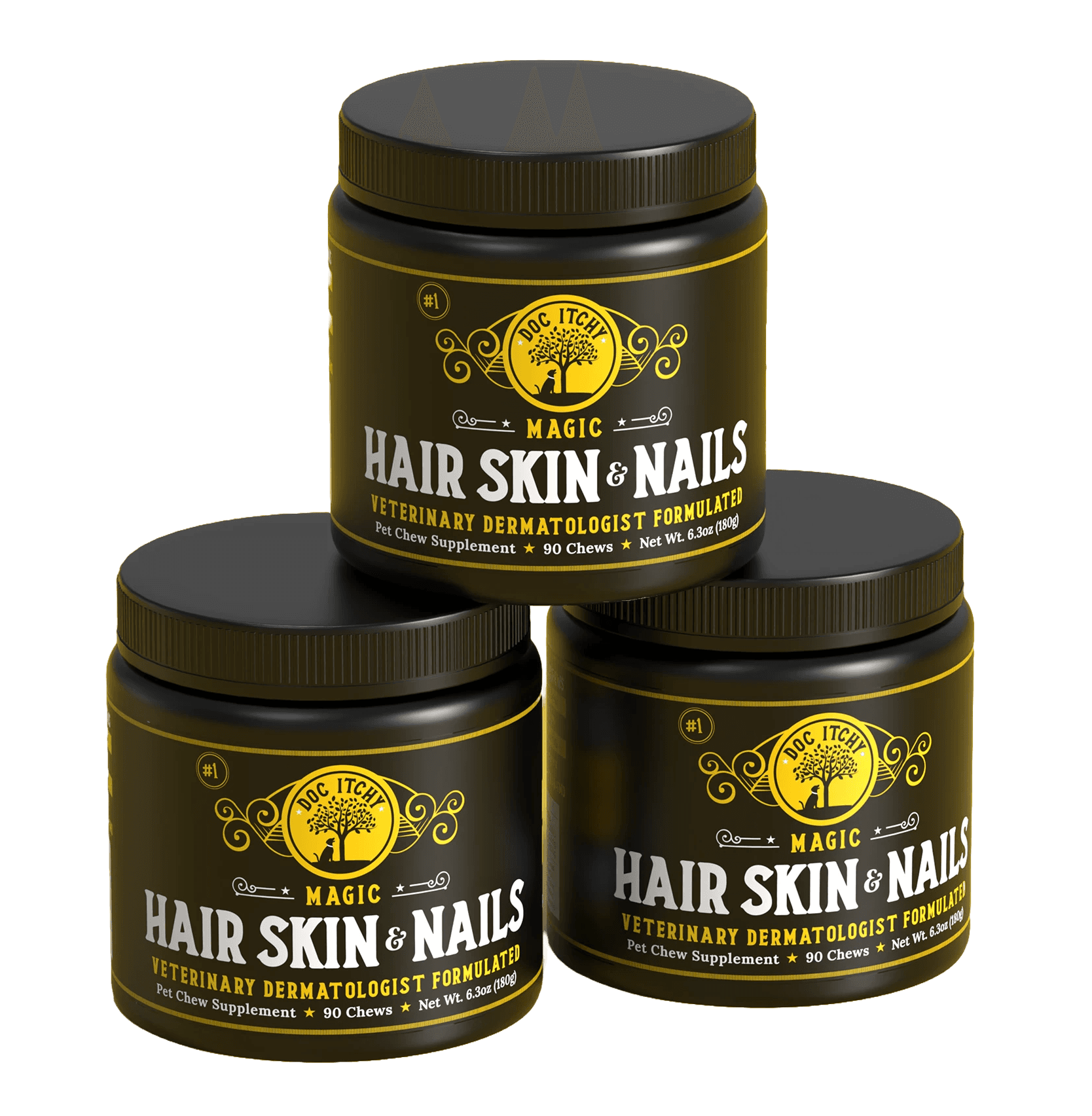
Both too little and too much vitamin A damage the skin; toxicity typically comes from over-supplementing with liver or cod liver oil. That's why formulation and balance matter. Doc Itchy pairs targeted nutrients—including vitamin A alongside EPA omega-3s and skin-supporting cofactors—so dogs get physiologic support for skin, coat, gut, and immune health without tipping into excess.